



Tmrw vs AG1: Honest Comparison Review (2026)

Something's changing in how people think about daily health, and it starts with asking better questions: Not "What can I take to feel better today?" but "What supports my body's ability to perform, repair, and adapt over the long term?
This shift explains why foundational supplements have moved beyond basic multivitamins and greens powders. The most forward-thinking formulas are now addressing the 12 hallmarks of aging - the cellular and systemic processes that determine how well your body functions today and how resilient it remains over time.
This is where all-in-one foundational formulations claim to shine. But despite similar marketing language, AG1 and Tmrw are not built the same. Their ingredient strategies, dosing principles, and scientific frameworks reflect completely different philosophies of what “foundational health” actually means.
If you’ve ever wondered which formula delivers the most complete, science-aligned daily support, this breakdown reveals where each one stands - and why the differences matter more than most people realize.
Foundational Nutrition: What Should It Actually Achieve?
Before comparing brands, it’s important to understand what a foundational supplement should provide. A true all-in-one daily formula isn’t meant to simply fill micronutrient gaps, it should support the underlying systems that influence how well you function day to day and how resilient your body remains over time.
A complete foundational formula supports:
- Daily micronutrient balance
- Gut health and digestive comfort
- Cellular energy output
- Longevity systems support (cellular renewal + resilience)
- Detoxification pathways
- Stress response and mental clarity
- Inflammation balance
- Long-term biological repair processes
AG1 addresses parts of this list. Tmrw addresses all of it.
Ingredient Philosophy
Here’s how each brand approaches formulation at the highest level:
[section]
Already, the gap begins to show: Tmrw is engineered with a completely different purpose.
AG1: Broad Coverage With Limited Specificity
AG1 is built on a legacy greens-based template: lots of plants, large blends, and a generalist wellness approach. It’s effective for broad nutritional insurance, but it lacks targeted depth.
Where AG1 succeeds:
- Strong greens profile
- Basic gut support with probiotics and enzymes
- Essential vitamins and minerals
- Easy daily routine
Where AG1 falls short:
- No NMN, CaAKG, Spermidine, Urolithin A, Fisetin, TMG
- Heavy reliance on proprietary blends
- Stevia aftertaste
- No NAD⁺ precursors or targeted longevity actives
- No vitamin D (sold separately as AG Vitamin D3+K2)

Tmrw: Built Backwards From Cellular Science
Tmrw begins with the question: “Which cellular pathways most influence long-term resilience and biological performance?”. From there, the formula is engineered using compounds validated in human research, with doses clear and clinically aligned.
What Tmrw includes:
- 35+ longevity compounds
- 9 probiotic strains + 1 spore strain
- Activated B-vitamins
- Detox botanicals
- Mitochondrial cofactors and NAD+ boosters
- Adaptogen + nootropic support
- Full dosing transparency
- NSF-certified manufacturing
Instead of trying to be a greens drink with extras, Tmrw is built as a complete longevity foundation for modern biology, the first of its kind.

Longevity & Cellular Support
This is the category where AG1 falls furthest behind, and where Tmrw becomes the clear leader. Here’s a simple snapshot:
[section]
Longevity is no longer niche science, it’s where the future of foundational health is heading. Ingredients like NMN, CaAKG, spermidine, and urolithin A are increasingly researched for their roles in cellular energy, mitochondrial efficiency, detox balance, and long-term biological resilience. These pathways influence how well the body repairs itself, responds to stress, and maintains vitality over time.
NAD+ levels drop as we age, and can be less than 50% by the time we hit 50. Tmrw’s carefully selected ingredients that support NAD+ levels get ahead of this real decline.
The real difference lies in how this science is applied. AG1 isn’t built around longevity actives, while Tmrw is engineered as a single, integrated daily system, bringing longevity science, gut support, and foundational nutrition together in one clearly dosed routine.
Gut Health & Digestive Support
Both brands include probiotics, but quality, diversity, and transparency differ drastically.
AG1
- Probiotics & enzymes included
- 5 strains, 10B CFU
- Narrower strain diversity
Tmrw
- 9 clinically studied strains + 1 spore strain
- 10B CFU total
- Prebiotics + digestive enzymes
- Botanicals supporting gut lining & digestion
Beyond digestion, gut diversity plays a role in mood, inflammation balance, and metabolic signaling. This is why Tmrw prioritizes strain variety rather than just CFU volume. A diverse microbiome offers more robust, long-term support across the body’s interconnected systems.
[section]
Taste & Daily Experience
Taste determines compliance, and compliance determines results.
AG1: Noticeable stevia aftertaste
Tmrw: Sweetened with thaumatin for a clean, subtle, long-term-friendly flavor
Thaumatin avoids the bitterness, metallic notes that is often described as tasting “medicinal”, and digestive sensitivity stevia often causes over time, an important consideration for a product meant to be used daily for years.
Clinical Dosing Reality Check
Many all-in-one formulas tout impressive ingredient lists, but "pixie dusting" - tiny, ineffective doses - undermines real results. Proprietary blends exacerbate this, lumping actives into low total mg groups to pad labels without therapeutic impact. Here's how AG1 stacks up against clinical evidence, with Tmrw's precision doses for contrast.
[section]
Ingredient Considerations: How AG1 and Tmrw Differ
All-in-one formulas often contain similar categories of ingredients, but the levels and types chosen can carry different considerations depending on the individual.
Below is a breakdown of key differences:
Licorice Root (Blood Pressure Consideration)
- AG1: Includes licorice root
- Tmrw: Does not include licorice root
Licorice root containing glycyrrhizin has been associated with increases in blood pressure and reductions in potassium levels in some individuals, particularly at higher intakes or with prolonged use.
Tmrw does not include licorice root in its daily formula.
Probiotic Strategy
- AG1: 5 strains, 10 billion CFU
- Tmrw: 9 strains + 1 spore strain, 10 billion CFU
Same CFU count, but Tmrw delivers twice the strain diversity. Different probiotic strains serve different functions across the gut microbiome: broader strain coverage means a more comprehensive approach.
Tmrw's blend spans Lactobacillus, Bifidobacterium, and Streptococcus families, plus Bacillus subtilis BS31, a spore-forming strain well-documented for its stability through the digestive tract. AG1 covers the fundamentals. Tmrw goes further.
B6: Why Tmrw Keeps the Dose Low
AG1 contains 5mg of vitamin B6 per scoop. Tmrw contains 2.5mg, half as much, in the bioactive P-5-P (pyridoxal-5-phosphate) form.
B6 shows up in multivitamins, energy drinks, magnesium blends and fortified foods, so daily intake from all sources adds up fast. Long-term high B6 intake has been linked to peripheral neuropathy, a form of nerve damage.¹
The Australian Therapeutic Goods Administration (TGA) has stated that peripheral neuropathy can occur at doses less than 50mg, and has noted “no minimum dose, duration of use or specific patient risk factors” have been identified as a safe threshold.² The TGA now requires warning labels on any product delivering more than 10mg of B6 per day.³
Both formulas sit below that warning threshold on their own. But the TGA’s position is that risk can’t be excluded below 50mg, particularly when people take several B6-containing products at once. A lower dose leaves more room for everything else in your diet and supplement routine.
Tmrw also uses P-5-P, the active coenzyme form the body uses directly, with no conversion step. Research explicitly recommends ”PLP-based supplements are preferred over pyridoxine supplements because of minimal neurotoxicity observed in neuronal cell viability tests.”⁴
[section]
AG1's Lead Problem: What You Should Know
When a product is taken daily, safety isn’t just about individual ingredients, it’s about long-term exposure over time.
Trace amounts of heavy metals like lead, cadmium, and arsenic can be present in raw materials. While these may be low on a single serving basis, consistency of use makes testing standards and transparency critical.
Independent, third-party testing plays an important role in verifying what’s actually present in a product beyond what’s listed on the label.
In April 2025, ConsumerLab, an independent testing organization, published this update on its testing of AG1 (the formula sold before AG1 Next Gen):
[section]
These findings matter because heavy metals can build up in the body with daily use, and AG1 is marketed as a product to take every day, for years.
Tmrw holds NSF Certified for Sport certification, one of the most rigorous independent quality standards in the supplement industry. Our full Certificate of Analysis and NSF certification reports are published directly on this page, so you can verify exactly what is and isn't in every scoop.
Where It's Made
AG1 was made entirely in New Zealand for years. Around 2022, production shifted largely offshore, costing about 140 jobs in Nelson, where it had been manufactured. AG1 sold in the US is now made in Utah.
Tmrw is still made in New Zealand, and every batch is NSF Certified for Sport. When you take something every day, it’s worth knowing exactly where it comes from.
Price and Value

Tmrw is the clear value winner because it delivers full-spectrum, one-scoop coverage at USD $89/month on subscription. AG1 is cheaper at USD $79/month, but it’s also the no-frills greens play, priced like a basic foundation (and travel packs typically cost more)
AG1 is the entry point, not the endpoint, and the price doesn’t reflect that. Without NMN, CaAKG, or a longevity layer, it’s a premium tag on a basic greens formula.
[section]
Taste
AG1: Started with its familiar sweet pineapple-vanilla base, now comes in Original, Citrus and Berry. Even with more flavors, Reddit users report an artificial taste, especially around the newer Next Gen formula.
Tmrw: Designed for lifelong daily compliance, and sweetened with thaumatin (katemfe fruit) and real berries and pineapple from New Zealand farms for a clean finish. The flavor is naturally refreshing with subtly sweet blueberry + pineapple (berry/tropical notes), naturally colored with blue spirulina + butterfly pea, and stays smooth and easy to enjoy every day with cold water.

Welcome Kit: Everything You Need to Get Started
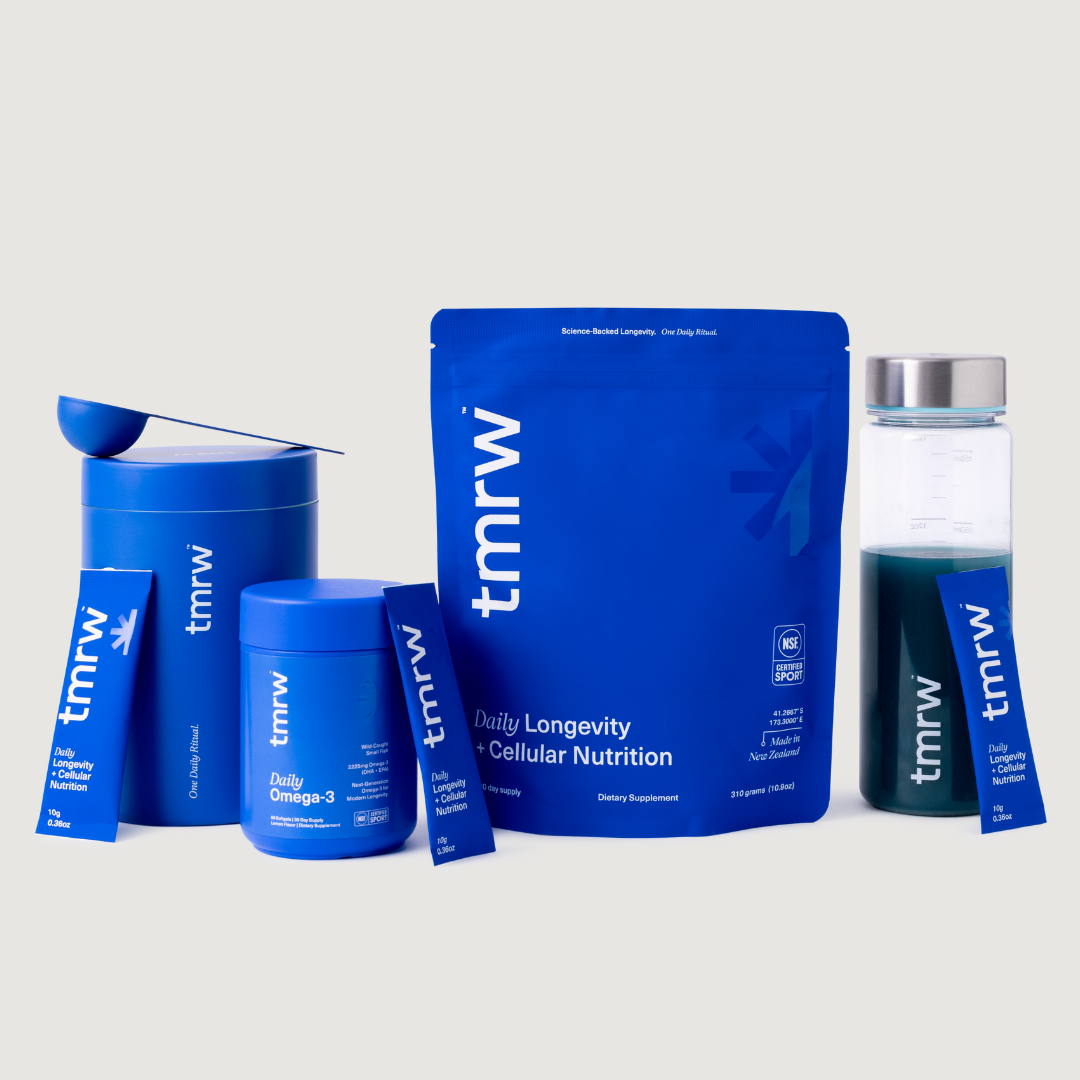
When you subscribe to Tmrw, you’re not just getting a month’s supply of nutrient-dense longevity blend. Your first order comes with a Welcome Kit designed to make your daily ritual seamless and enjoyable, at no extra charge.
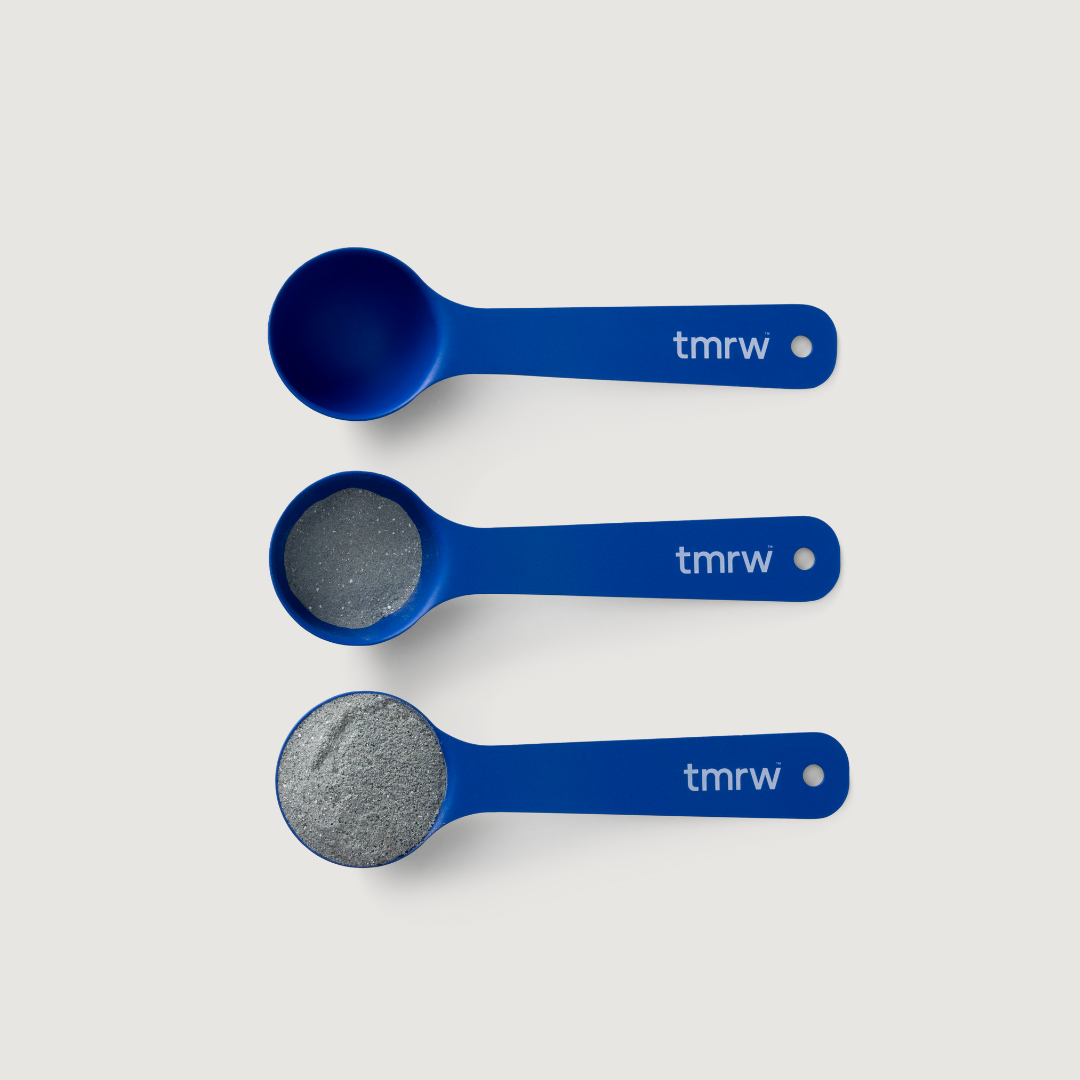
- Tmrw Shaker, Scoop & Canister: Normally priced at $47, these essentials are included for free. The shaker makes mixing your drink effortless; the custom scoop ensures perfect portions; and the canister keeps your formula fresh and organized on your counter.
- Tmrw Travel Sachets (3 ct): Valued at $11 and also free, these single‑serving sachets tuck easily into your bag so you never miss a serving when you’re on the go. You can buy top-up travel sachets on the members store if you prefer the sachets.
Your subscription ships every four weeks, so there’s always a fresh pouch of Tmrw ready when you need it. With the Welcome Kit, you have everything you need to start your healthy aging routine and stay consistent, whether at home or traveling.
[section]
Final Verdict: Which One Wins?
AG1 delivers solid basic wellness - greens coverage and simple nutrition insurance. But it falls short on longevity actives (zero NMN or CaAKG), leaves out vitamin D, and has faced heavy metal concerns in independent testing.
Tmrw operates in a different league entirely. This precision longevity system fuses foundational nutrition, 9 + 1 spore strain gut support, detox pathways, mitochondrial power, inflammation balance, and 35+ science-backed cellular actives, all in one clean scoop. No stevia aftertaste, no heavy metals (NSF-certified), and B6 kept to a gentle 2.5mg in its active P-5-P form. It's engineered not just for today's energy, but for how your body performs, repairs, and stays resilient over decades.
So, need basic greens? AG1 suffices. Crave future-proof health without the hidden dangers? Tmrw redefines what's possible.
[section]
Works Cited
- Hadtstein & Vrolijk, "Vitamin B6-Induced Neuropathy: Exploring the Mechanisms of Pyridoxine Toxicity" (2021), https://pmc.ncbi.nlm.nih.gov/articles/PMC8483950/
- TGA Safety Update, "Peripheral neuropathy with supplementary vitamin B6" (2022), https://www.tga.gov.au/news/safety-updates/medicines-containing-vitamin-b6-pyridoxine-pyridoxal
- TGA Media Release, "Stronger safety controls to be introduced for products containing vitamin B6" (2025), https://www.tga.gov.au/news/media-releases/stronger-safety-controls-be-introduced-products-containing-vitamin-b6
- Expert Consensus on Vitamin B6 Therapeutic Use (2025) , https://pmc.ncbi.nlm.nih.gov/articles/PMC12090844/
- AG1 Lead Testing and Safety Concerns - ConsumerLab, accessed January 30, 2026, https://www.consumerlab.com/answers/athletic-greens-ag1-is-it-worth-it/athletic-greens-ag1/
- AG1 Ingredients Analysis - AG1 Product Detail, accessed January 30, 2026, https://drinkag1.com/products/greens-powder-pouch
- B6-Induced Peripheral Neuropathy Risks, accessed January 30, 2026, https://pmc.ncbi.nlm.nih.gov/articles/PMC8483950/
- CaAKG Biological Age Reduction Trial, accessed January 30, 2026, https://clinicaltrials.gov/study/NCT07114536
- Fisetin Senolytic Benefits Study, accessed January 30, 2026, https://www.nad.com/news/fisetin-fights-frailty-new-study-shows-supplment-preserves-strength
- NMN Dosage RCTs for NAD+ Boost, accessed January 30, 2026, https://www.frontiersin.org/journals/aging/articles/10.3389/fragi.2022.851698/full
- Spermidine Autophagy Benefits Review, accessed January 30, 2026, https://www.aging-us.com/article/101354/text
- AG1 Next Gen Taste Complaints - Reddit, accessed January 30, 2026, https://www.reddit.com/r/AthleticGreens/comments/1hnr0q3/notice_a_change_in_taste_as_of_late/
- AG1 Taste Feedback - Reddit, accessed January 30, 2026, https://www.reddit.com/r/KaraAndNate/comments/1f1n2zw/theres_no_way_ag1_taste_good/
- Total, Dietary, and Supplemental Vitamin C Intake and Risk of Incident Kidney Stones, accessed January 30, 2026, https://pmc.ncbi.nlm.nih.gov/articles/PMC4769668/#:~:text=Two%20previous%20epidemiologic%20studies%20have,3%2C12%2C15
- A low dose of daily licorice intake affects renin, aldosterone, and home blood pressure in a randomized crossover trial, https://www.sciencedirect.com/science/article/pii/S0002916524000194
- Milne, J. & Wesley-Smith, M., “AG1 supplement created by Kiwi businessman under scrutiny for liver harm reports,” NZ Herald, December 10, 2024, https://www.nzherald.co.nz/business/ag1-supplement-under-scrutiny-for-liver-harm-reports/BO6FMESPXJBB3HDFJ7O5NGMZLA/