




The Probiotic That Survives Your Stomach: Why Spore Strains Matter
Most conversations about probiotics focus on what's on the label: how many strains, how many billion CFU. Far fewer ask the question that decides whether any of it matters, which is how many of those bacteria are still alive by the time they reach your gut.
Between your mouth and your intestines sits one of the harshest environments in the body. Plenty of bacteria never make it through. A handful of probiotics has evolved a way around that problem, and it comes down to one survival trick: the spore. These are known as spore probiotics, and Bacillus subtilis is one of the best known.
Do probiotics survive stomach acid?
Your stomach is designed to break things down, and that includes microbes. Between meals and in a fasted state, stomach acid can sit at a pH of around 1 to 2.5, which puts it in the same range as lemon juice or stronger. Right after a meal it climbs closer to neutral, then drops again as digestion gets going.
That acidity is one of your body's first lines of defense against harmful bacteria. The catch is that it does not tell the difference between bacteria you want to keep out and bacteria you swallowed on purpose. Researchers describe the stomach as a significant barrier for most probiotics, and it is followed by a second hurdle in the small intestine, where bile salts add their own stress.
Most probiotics on the market are Lactobacillus and Bifidobacterium strains. They are well studied and genuinely useful, but they are living cells with no protective shell, so a share of every dose is lost to stomach acid on the way down.
What a spore actually is
Bacillus subtilis is a bacterium found naturally in soil and in some fermented foods, including natto, the traditional Japanese fermented soybean dish. When conditions turn hostile, it does something most bacteria cannot. It packs its genetic material into a tough, dormant shell called a spore and waits.
In spore form, the bacterium is not growing or feeding, which is exactly what protects it. It can ride out heat, dryness and acid that would destroy an ordinary cell. That is why researchers describe spore-based probiotics as having important advantages over conventional strains: they can make it through the stomach and the bile salts of the small intestine and arrive alive.
Once the spore reaches the nutrient-rich environment of the small intestine, those signals tell it conditions are safe again. It germinates, switching back into an active cell that can go to work.
What the research shows
For years, the idea that spores survive the stomach and wake up in the gut rested mostly on lab models and animal studies. A 2021 trial in Frontiers in Microbiology tested it directly in people.
-
The setup: 11 healthy adults with an ileostomy took a Bacillus subtilis spore probiotic with breakfast, giving researchers direct access to what reached the end of the small intestine.
-
Within 3 hours: spores and active cells were already showing up in the small intestine.
-
By the end: every participant had active cells present at some point during the eight-hour study.
-
The takeaway: the spores made it through the stomach and germinated where they were supposed to.
The next question is whether spore probiotics translate into feeling better. A 2022 randomized, double-blind, placebo-controlled trial in Gut Microbes put that to the test.
-
The setup: 76 healthy adults with mild digestive complaints were followed for six weeks.
-
The result: 45% of people taking a Bacillus subtilis strain improved on a combined score for bloating, burping and gas, compared with 22% on placebo.
For anyone weighing up probiotics for bloating, that gap is worth paying attention to.
The researchers' leading explanation is digestive support. Once active, Bacillus subtilis releases enzymes that help break down food, which may mean less undigested material fermenting into gas further down the line. One honest caveat applies: probiotic effects are strain specific, so results from one Bacillus subtilis strain do not automatically carry over to every other.
Why one type of probiotic isn't the whole answer
None of this makes conventional probiotics a bad choice. Lactobacillus and Bifidobacterium strains remain the most widely used and studied probiotics, and Bifidobacteria in particular are core residents of a healthy large intestine.
The smarter way to think about it is coverage. Spore strains are built to survive the trip and become active in the small intestine, where most digestion and nutrient absorption happens. Conventional strains are associated with the wider gut community further along. Combining the two gives the gut more than one route to support, rather than relying on a single type of bacteria to do everything.
|
Feature |
Conventional |
Spore |
|
Examples |
Lactobacillus, Bifidobacterium |
Bacillus subtilis |
|
Form |
Live cells, no shell |
Dormant, protective spore |
|
Stomach acid |
Some of each dose is lost |
Built to survive it |
|
Where they work |
Across the wider gut |
Small intestine |
What surrounds the probiotics matters too. Prebiotic fibers feed the bacteria once they arrive, and digestive enzymes help break down food so there is less left over to ferment into gas.

How Tmrw approaches gut health
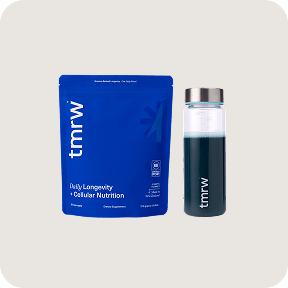
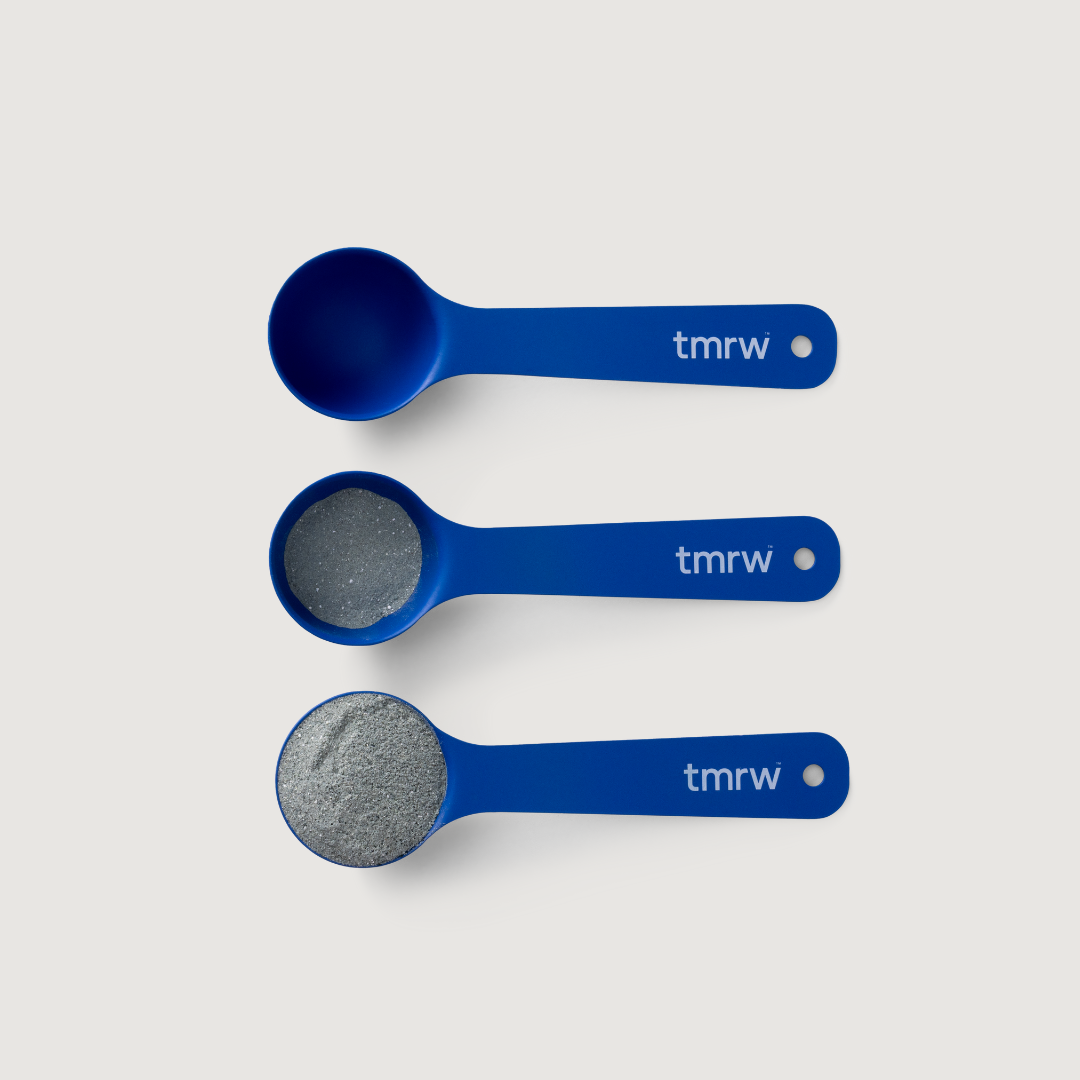
This is the thinking behind the gut health system in Tmrw. Each scoop delivers a 70mg probiotic blend of 9 strains plus 1 spore strain, Bacillus subtilis, for 10 billion CFU in total. The conventional strains and the spore strain work side by side, so the formula doesn't rely on any one type of bacteria to do the job alone.
That blend sits inside a wider gut stack, with prebiotics to feed your microbiome and digestive enzymes to help your body break down what you eat. In an observational study of Tmrw customers, 88% reported less bloating after a minimum of 30 days.
Tmrw isn't a standalone gut health supplement, because gut health is one part of a bigger picture. It works best as part of a system, which is why Tmrw brings 88 science-backed ingredients together in one daily drink instead of asking you to piece it together yourself.
A healthy gut starts with what actually arrives there.
Sources
-
Colom J et al. Presence and germination of the probiotic Bacillus subtilis DE111 in the human small intestinal tract: a randomized, crossover, double-blind, and placebo-controlled study. Frontiers in Microbiology, 2021. https://www.frontiersin.org/articles/10.3389/fmicb.2021.715863
-
Garvey SM et al. The probiotic Bacillus subtilis BS50 decreases gastrointestinal symptoms in healthy adults: a randomized, double-blind, placebo-controlled trial. Gut Microbes, 2022. https://doi.org/10.1080/19490976.2022.2122668 (summary via NutraIngredients)
-
Tmrw observational study of customers after a minimum of 30 days, as reported on the Tmrw product page.